.png)
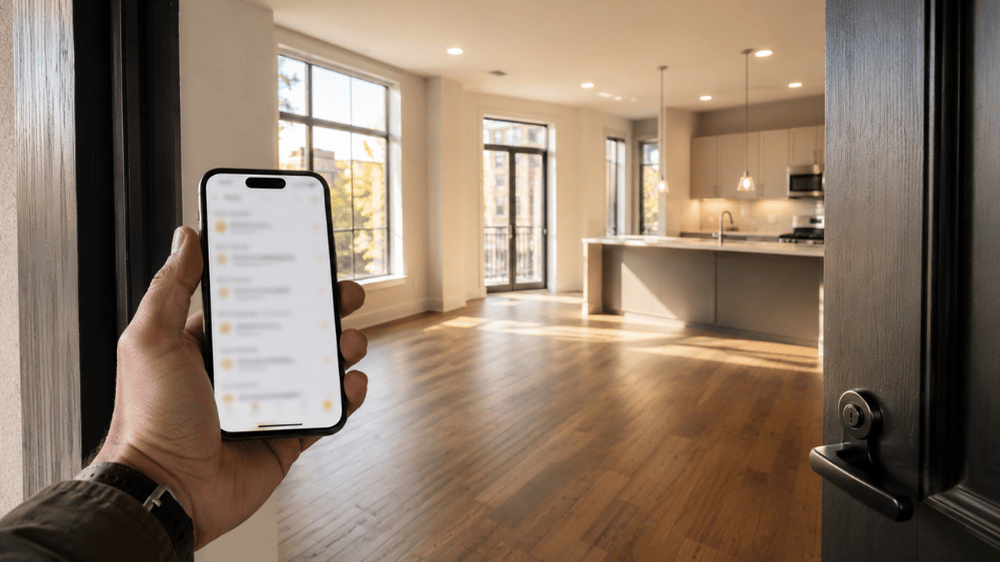
The most useful questions to ask when touring an apartment fall into five categories: cost and fees, lease terms and policies, maintenance, building and unit condition, and the surrounding area. Covering all five before you leave prevents the most common post-move surprises. Early termination fees alone typically equal one to two months of rent (as of Q3 2026), and most renters do not ask about them until it is too late.
If you are still deciding which apartments to tour, brightplace shows available units with pricing and floor plan details side by side at app.brightplace.ai.
Ask about every cost beyond listed rent before you sign. The listed price is rarely the full monthly number.
"What utilities are included in rent, and what do I pay separately?" Electricity is almost always separate. Water, sewer, and trash are sometimes included. Gas varies. Ask for a dollar estimate of monthly utility costs for this specific unit.
"Is parking included, or is it an additional monthly fee?" Parking fees run $50-$200/month at most properties (as of Q3 2026). If parking is not included and you have a car, this changes your effective rent.
"What is the pet deposit, and is there monthly pet rent on top of it?" A pet deposit is a refundable one-time fee covering potential damage. Pet rent is a non-refundable monthly surcharge for having a pet. Both can appear in the same lease. Pet deposits run $200-$500 and monthly pet rent runs $25-$75/pet (as of Q3 2026). For more on pet fee structures, see brightplace's guide to pet-friendly apartments.
"Is renters insurance required?" Renters insurance is a personal policy covering a tenant's belongings against theft, fire, or certain types of damage. Many properties require proof of coverage before move-in. Standard policies cost $15-$30/month (as of Q3 2026). brightplace's guide to renters insurance with roommates covers how coverage works in shared apartments.
"What is the security deposit, and is any portion non-refundable?" A security deposit is a refundable payment, typically equal to one month's rent, held until move-out to cover damage beyond normal wear and tear. Ask whether any portion is designated as a non-refundable fee.
In a master-metered building, all units share a single utility meter, meaning your monthly utility cost is estimated or split rather than based on your actual usage. This can add $50-$150/month in unpredictable costs compared to individually metered units (as of Q3 2026). Ask: "Is this unit individually metered for electricity, gas, and water?" The answer directly affects your monthly budget. For a full breakdown of costs beyond base rent, see your true monthly cost as a renter.
brightplace tracks listed rent and fee structures across available apartments at app.brightplace.ai.
"What lease lengths are available?" Ask whether the property offers 12-month, 6-month, or month-to-month options. Shorter leases typically carry a rent premium. brightplace's overview of short-term lease agreements covers how these differ.
"What is the exact early termination fee?" A lease break penalty is a fee charged when a tenant ends a lease before its expiration date, typically equal to one to two months of rent (as of Q3 2026). Get the exact dollar amount or formula, not just confirmation that a penalty exists.
"What is the lease renewal process and how much notice is required?" Most properties require 30-60 days written notice before lease expiration. Ask what happens to your rent at renewal.
"Can I sublet or add a roommate to the lease?" Subletting and roommate policies vary widely. Get the answer in writing. brightplace's guide to subletting in NYC covers how sublet rules work in detail.
"How are maintenance requests submitted, and what is the average response time?" Ask whether the property uses an online portal, phone, or email. Ask specifically about non-emergency response times. Same-day response for emergencies should be standard.
"Is the maintenance team on-site or contracted out?" On-site teams typically respond faster. Contracted maintenance may mean longer wait times for routine issues.
"Has this unit had any water damage, mold, or pest issues in the past two years?" In some states, landlords are required to disclose this. Ask directly regardless of disclosure requirements.
"Are any renovations planned for this unit or building?" Renovations to adjacent units mean noise and disruption. Renovations to your unit before move-in may delay your move-in date.
This is the part competitors miss. Do not rely only on the leasing agent's answers. Observe these yourself during the tour:
Check under kitchen and bathroom sinks for moisture, staining, or mold. Active leaks or water damage indicate deferred maintenance.
Test water pressure in the shower and kitchen faucet. Run both simultaneously to check if pressure drops.
Flush every toilet. Slow drainage or running toilets after flushing indicate plumbing issues.
Open and close every window. Stuck windows reflect deferred maintenance and can affect ventilation.
Check cell signal on your carrier inside the unit. Test in every room. Weak signal in the bedroom matters if you work from home. The FCC's broadband map can supplement your in-person test.
Look at outlets and light switches. Discolored or cracked covers reflect older electrical work. Ask when the unit was last updated.
"What is the guest policy?" Most properties limit consecutive guest stays to 7-14 days (as of Q3 2026) before requiring the guest to be added to the lease. Ask for the specific number.
"What are the quiet hours?" Standard is 10 PM to 8 AM, but policies vary. Ask about enforcement.
"Is smoking allowed in the unit, on the balcony, or in common areas?" Even non-smokers should ask. Adjacent-unit smoke intrusion is a common complaint.
"How does package delivery work?" Ask whether the building has a locker system, front desk acceptance, or unmanaged delivery. Package theft is a real concern in buildings without a managed system.
"Can I paint, drill, or mount anything on the walls?" Ask about modification permissions and whether there is a restoration requirement at move-out.
Describe and evaluate the surrounding area by lifestyle infrastructure. Ask:
"What grocery stores are within a 10-minute drive or walk?" Name-check the answer. A 10-minute drive to the nearest grocery store costs real time and money.
"Which transit stops are closest, and what lines do they serve?" Commute time varies dramatically by which line you are on, not just which station is closest.
"Are there any planned construction projects on this block or adjacent blocks in the next 12 months?" Planned nearby construction can mean 18-36 months of noise and vibration, depending on project scope. This is one of the least-disclosed issues in apartment tours.
Bring a notes app or printed checklist rather than relying on memory. Ask to see the actual unit you would rent, not a model unit. Leasing offices commonly show model units; the actual available unit may differ in layout, condition, or view.
Schedule the tour during the time of day you would most often be home. A unit that feels quiet at 10 AM may be different at 6 PM when neighbors are home. Bring your phone to test cell signal. brightplace's guide to renting an apartment covers the full preparation checklist.
Once you have your questions ready, find apartments worth touring at app.brightplace.ai.
Last reviewed: July 2026
The 30% rule is a guideline that renters should spend no more than 30% of gross monthly income on rent. On a $5,000/month gross income, that means a maximum of $1,500/month in rent. Most NYC landlords use the stricter 40x rule (annual income must equal 40 times monthly rent), which produces a similar threshold.
Do not volunteer your maximum budget, express desperation to move quickly, or criticize the unit's condition in front of the leasing agent. These reduce your negotiating position. Ask questions, take notes, and express interest without committing. Make your decision after the tour, not during it.
Bring a checklist of questions organized by category (cost, lease, maintenance, condition, area). Ask to see the actual unit, not a model. Tour at the time of day you would be home most. Test cell signal, water pressure, and window operation. Have your application documents ready to submit within 24 hours if the unit fits.
A pet deposit is a refundable one-time fee, typically $200-$500, held to cover potential pet damage (as of Q3 2026). Pet rent is a non-refundable monthly charge of $25-$75 per pet added to your base rent. Both can appear in the same lease. Ask which applies and get the exact amounts in writing.
Check under sinks for moisture or mold. Test water pressure in the shower and kitchen simultaneously. Flush every toilet. Open and close all windows. Check cell signal in every room. Look at outlets and light switch covers for signs of age. These observations reveal maintenance quality that leasing agents will not volunteer.
A master-metered building shares one utility meter across all units. Your monthly cost is estimated or split, not based on actual usage. This can add $50-$150/month in costs compared to individually metered units (as of Q3 2026). Ask whether the unit is individually metered before comparing rent prices.
We'll find a place that you'll actually love