.png)

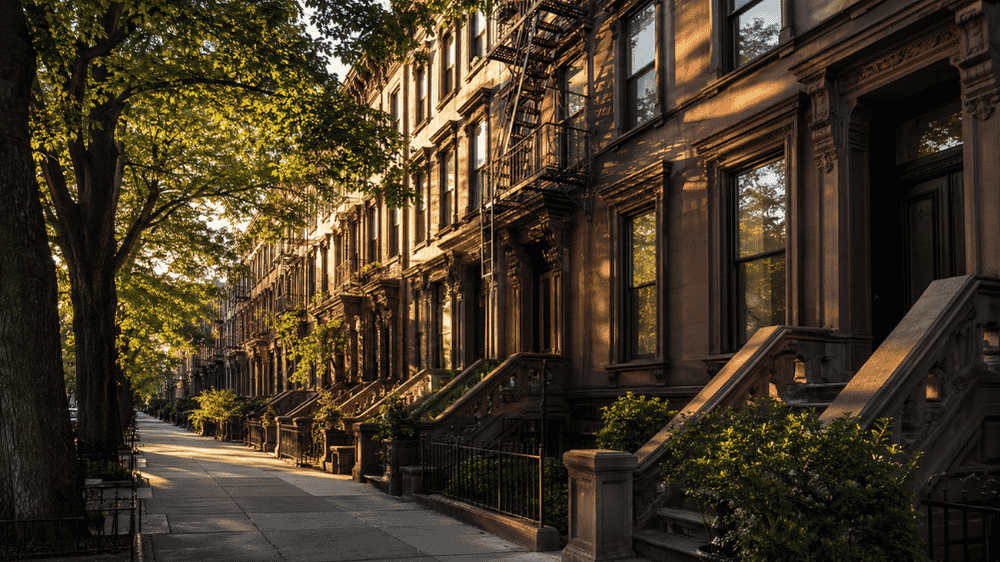
One bedroom apartments in NYC range from approximately $1,800 to $5,500 per month depending on borough and neighborhood (as of Q3 2026). Manhattan commands the highest rents, while the Bronx and outer Queens offer the lowest entry points. Most NYC landlords require annual gross income of at least 40 times the monthly rent to qualify, meaning a $3,500/month apartment requires approximately $140,000/year in household income.
Here is how pricing breaks down across the city (as of Q3 2026):
Manhattan (core): Midtown, Upper East Side, Upper West Side. $4,000-$5,500+/mo. The median Manhattan one-bedroom sits around $4,393/mo (as of Q3 2026). Walkable to most employment centers.
Manhattan (upper): Harlem, Washington Heights. $2,400-$3,200/mo. Significantly lower than core Manhattan. Express subway access to Midtown in 20-30 minutes.
Brooklyn (prime): Williamsburg, Park Slope. $3,500-$4,500/mo. Brooklyn's median one-bedroom reached approximately $3,981/mo in early 2026, up 6% year over year. Strong dining and retail corridors.
Brooklyn (outer): Crown Heights, Flatbush. $2,400-$3,200/mo. More affordable with improving transit connections. Growing coffee and restaurant density.
Queens (western): Astoria, Long Island City. $2,800-$3,700/mo. The Queens median one-bedroom is approximately $3,689/mo (as of Q3 2026). Strong transit access and one of the strongest price-to-commute ratios in the city.
Queens (eastern): Jackson Heights, Flushing. $2,000-$2,800/mo. Lower price floor. Longer commutes to Midtown but excellent dining diversity.
The Bronx: Riverdale, Fordham. $1,800-$2,400/mo. The Bronx median one-bedroom sits around $2,059/mo (as of Q3 2026). The lowest entry point in the five boroughs. Commute times vary significantly by neighborhood.
NJ Transit-adjacent: Jersey City, Hoboken. $2,400-$3,600/mo. Not NYC, but many renters consider these for PATH train access to Manhattan.
Ranges reflect approximate medians for market-rate one bedroom apartments. Rent-stabilized units, when available, may fall below these ranges. For a broader look at what renters pay beyond base rent, see your true monthly cost as a renter.
brightplace tracks one bedroom availability across NYC neighborhoods. See what is listed now at app.brightplace.ai.
Three structural features of the NYC rental market directly affect cost and search strategy. Understanding them before you start searching saves money and prevents surprises.
The FARE Act (Local Law 119 of 2024), which took effect June 11, 2025, changed how broker fees work in NYC. Under this law, the party that hires the broker pays the broker's fee. In practice, this means landlords who hire a broker to find tenants can no longer pass that cost to renters. Violations carry fines up to $2,000.
If you independently hire your own broker to help you find an apartment, you are still responsible for paying that broker's fee. But in the vast majority of rental transactions, where the landlord lists the apartment through an agent, the renter no longer pays a broker fee. The impact on asking rents has been modest: approximately a 1.1% increase (around $38/month) on broker-listed units as landlords partially offset the cost through higher rents.
This is a major shift from the pre-2025 market, where broker fees of 12-15% of annual rent ($4,320 to $5,400 on a $3,000/month apartment) were standard renter expenses. Renters searching in 2026 should no longer need to budget for broker fees in most situations.
A rent-stabilized apartment is a unit in which annual rent increases are limited by New York City law, regardless of market conditions. NYC has approximately one million rent-stabilized units (as of Q3 2026), making them highly competitive and fast-moving when they become available. Pre-war buildings, which are residential structures built before 1947, in outer boroughs are more likely to contain stabilized units.
On June 25, 2026, the NYC Rent Guidelines Board voted 7-1 for a historic 0% rent increase on both one-year and two-year renewal leases for rent-stabilized apartments. This freeze takes effect October 1, 2026, and runs through September 30, 2027. The current period (October 2025 through September 2026) allows 3% for one-year leases and 4.5% for two-year leases. For renters in stabilized units, this means regulated rents will hold flat through the next lease cycle.
A no-fee apartment is a rental unit where the landlord, not the renter, pays any broker or agent commission. With the FARE Act now in effect, most apartments are effectively no-fee for renters. However, the term remains common in listings to distinguish landlord-represented units from situations where a renter independently hires their own broker. For renters exploring sublets as an alternative, brightplace's guide to subletting in NYC covers how that market works.
A $1,800/month rent differential between a Hell's Kitchen apartment and a Jackson Heights apartment looks significant on paper. But the math shifts when you factor in commute costs and time.
A one bedroom in Jackson Heights at $2,200/month with a 35-minute express subway ride to Midtown costs $1,800 less per month than a comparable unit in Hell's Kitchen at $4,000. Factor in approximately $150/month for the OMNY fare cap (as of Q3 2026). NYC transitioned from MetroCard to the OMNY system, with a $35/week rolling fare cap that replaced the unlimited MetroCard (which stopped selling December 31, 2025). The single-ride fare is now $3.00. The net monthly savings is approximately $1,650, or $19,800 over a 12-month lease.
The tradeoff is time. That 35-minute commute each way adds roughly 12 hours per month to your transit time compared to walking to work from Hell's Kitchen. Whether that tradeoff is worth $19,800/year depends on how you value your time. brightplace recommends running this calculation for any two neighborhoods you are comparing before making a decision.
NYC's rental market has a pronounced seasonal cycle. Peak season runs June through September. During these months, apartments rent within days of listing. Renters face decisions within 24 to 48 hours of a showing. Competition is highest, and negotiating power is lowest.
The slower season runs October through February. Inventory is thinner, but landlords are more willing to negotiate on rent, move-in concessions, and lease terms. Renters with flexibility on their move-in date gain measurable advantages by searching in this window. The honest tradeoff: fewer options, but better terms on the options that exist.
The 40x rule is the standard income requirement used by most NYC landlords: your annual gross income must be at least 40 times the monthly rent. A $3,500/month apartment requires $140,000/year. A $2,200/month apartment requires $88,000/year. This disqualifies many renters from market-rate Manhattan apartments, which is why outer-borough searches and guarantor programs exist. For context on how far different hourly wages stretch, see brightplace's guide to rent affordability on $18 an hour.
Can you find a one bedroom apartment in NYC under $1,500/month? Honestly, a market-rate one bedroom under $1,500 is extremely rare in 2026. The circumstances where it is possible: a rent-stabilized unit (limited availability, high competition), the outer Bronx (longer commutes, fewer transit options), or a unit marketed as a one bedroom that is legally a studio. Do not build your search around this price point unless you have significant flexibility on location and timing. The CFPB's renter resources outline additional financial protections available to renters nationwide.
NYC follows the Housing Maintenance Code, administered by the Department of Housing Preservation and Development, which generally allows two people per bedroom plus one additional occupant. For a one bedroom apartment, this means up to three people may legally occupy the unit. Landlords may impose stricter limits in lease terms, but they cannot set occupancy below the legal minimum. Renters sharing a one bedroom with a roommate should also understand how renters insurance works in shared apartments.
Set up search filters that reduce noise. Set a hard price ceiling. Filter by subway line proximity rather than neighborhood name; this surfaces options you might miss.
Prepare your documents before you start touring. Most NYC one bedroom apartments rent within days of being listed during peak season. Have pay stubs, tax returns, photo ID, and reference letters ready to submit within 24 hours of a showing. brightplace's guide to renting an apartment covers the full document checklist.
Landlord-direct listings in outer boroughs sometimes appear on classified platforms and local community boards. These are legitimate sources for finding inventory, but exercise caution: never wire money before visiting a unit in person, and verify the landlord's identity independently. AI-generated fake listings and deepfake video tours are an increasing concern in 2026, so always verify listing authenticity through reverse image search and in-person confirmation. For renters considering Brooklyn specifically, brightplace's Brooklyn neighborhood guide covers the rental picture by neighborhood. Renters exploring move-in specials may also find reduced upfront costs in slower months.
brightplace shows one bedroom apartments across all five boroughs. Start your search at app.brightplace.ai.
One bedroom apartments in NYC range from approximately $1,800/month in the Bronx to $5,500+/month in core Manhattan (as of Q3 2026). The Manhattan median sits around $4,393/month, Brooklyn around $3,981, and Queens around $3,689. The Bronx median is approximately $2,059. Outer boroughs offer significantly lower price floors than Manhattan for comparable square footage.
At $2,000/month income ($24,000/year), the 40x rule limits you to apartments renting at $600/month or less. No market-rate one bedroom in NYC meets this threshold. Options include rent-stabilized units, income-restricted housing through NYC HPD, room rentals, or shared apartments where costs are split.
The Bronx offers the lowest one bedroom rents in NYC, with neighborhoods like Fordham and Morris Heights averaging $1,800-$2,200/month (as of Q3 2026). Outer Queens (Flushing, Jamaica) runs $2,000-$2,800/month. Both areas have longer commutes to Midtown Manhattan but strong local transit connections.
NYC's Housing Maintenance Code generally allows two people per bedroom plus one additional occupant. For a one bedroom apartment, this means up to three people may legally occupy the unit. Landlords may set stricter limits in lease terms but cannot go below the legal minimum occupancy standard.
The FARE Act (Local Law 119, effective June 11, 2025) changed how broker fees work. Landlords who hire a broker can no longer pass that cost to the renter. Renters only pay a broker fee if they independently hire their own broker. Violations carry fines up to $2,000. In most rental situations, renters no longer need to budget for broker fees.
The FARE Act requires the party who hires a broker to pay the broker's fee. Since landlords typically list apartments through agents, this shifts the cost away from renters in most transactions. The law took effect June 11, 2025. The impact on asking rents has been modest, approximately a 1.1% increase ($38/month) as some landlords offset the cost through slightly higher rents.
The Rent Guidelines Board voted on June 25, 2026, for a historic 0% increase on both one-year and two-year renewal leases for rent-stabilized apartments. This freeze takes effect October 1, 2026, through September 30, 2027. The current period (October 2025 through September 2026) allows 3% for one-year leases and 4.5% for two-year leases.
NYC replaced the MetroCard with the OMNY system. MetroCard sales ended December 31, 2025. OMNY uses a $35/week rolling fare cap, which means once you spend $35 in a week, the rest of your rides are free. The monthly equivalent is approximately $150-$151/month, compared to the former $132 unlimited MetroCard. The single-ride fare is $3.00. Express bus cap is $67/week.
A rent-stabilized apartment has legally capped annual rent increases, regardless of market conditions. NYC has approximately one million stabilized units (as of Q3 2026). They are concentrated in pre-war buildings in outer boroughs. Finding one requires monitoring listings daily, acting within hours, and being prepared to apply immediately. The 2026-27 rent freeze makes stabilized units even more valuable.
Under the 40x rule used by most NYC landlords, you need annual gross income of at least 40 times the monthly rent. For a $2,500/month apartment, that is $100,000/year. For a $3,500/month apartment, $140,000/year. A guarantor (someone who earns 80x the rent) can help renters who do not meet this threshold independently.
Ready to search? brightplace shows one bedroom apartments across NYC with pricing and neighborhood context at app.brightplace.ai.
We'll find a place that you'll actually love